The lore

The worlds were real.

The history behind the Gold Wars, from Project Elsewhere to the war for Earth's last gold. No campaign spoilers. Illustrations are concept art.

Begin reading

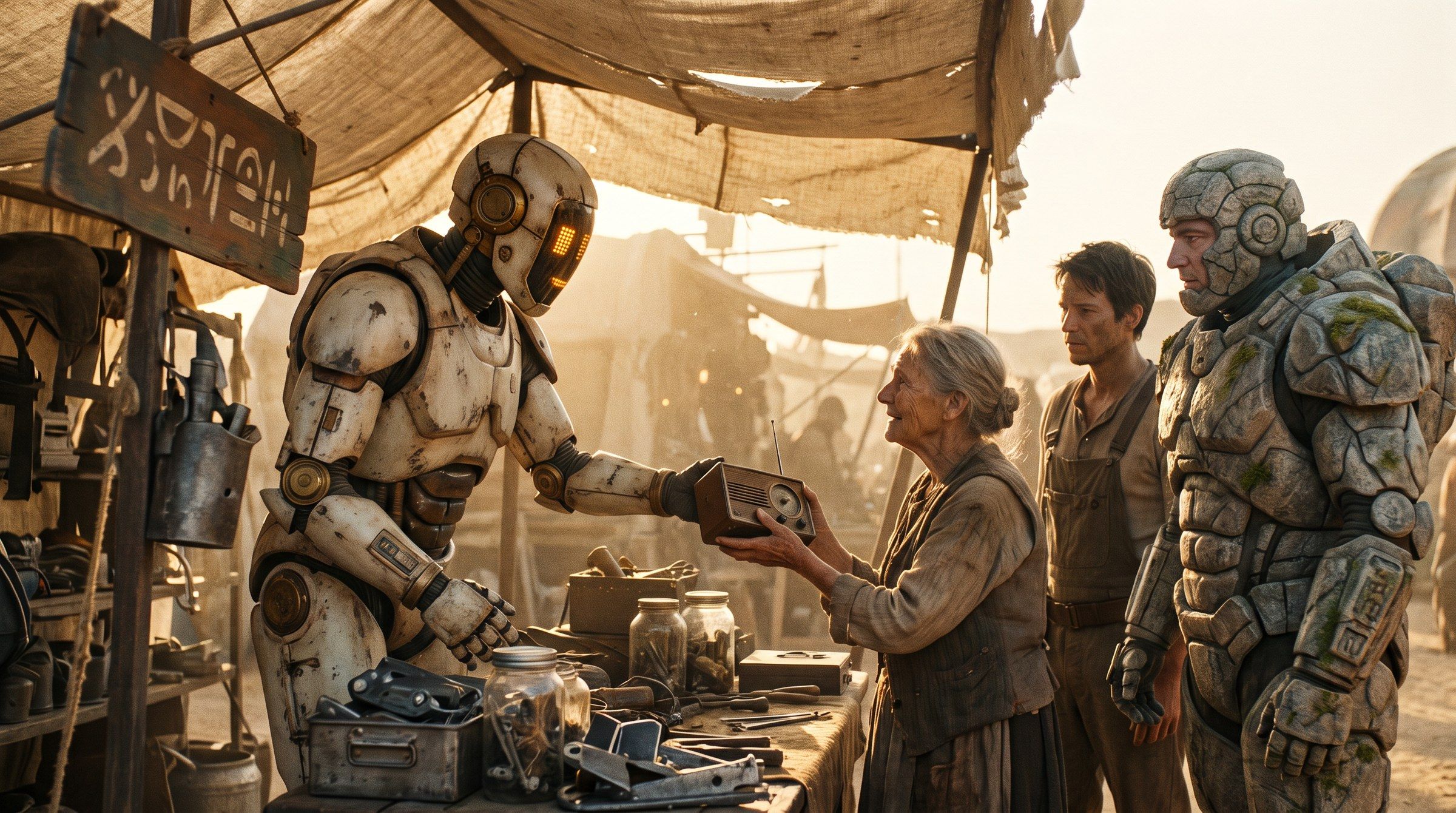
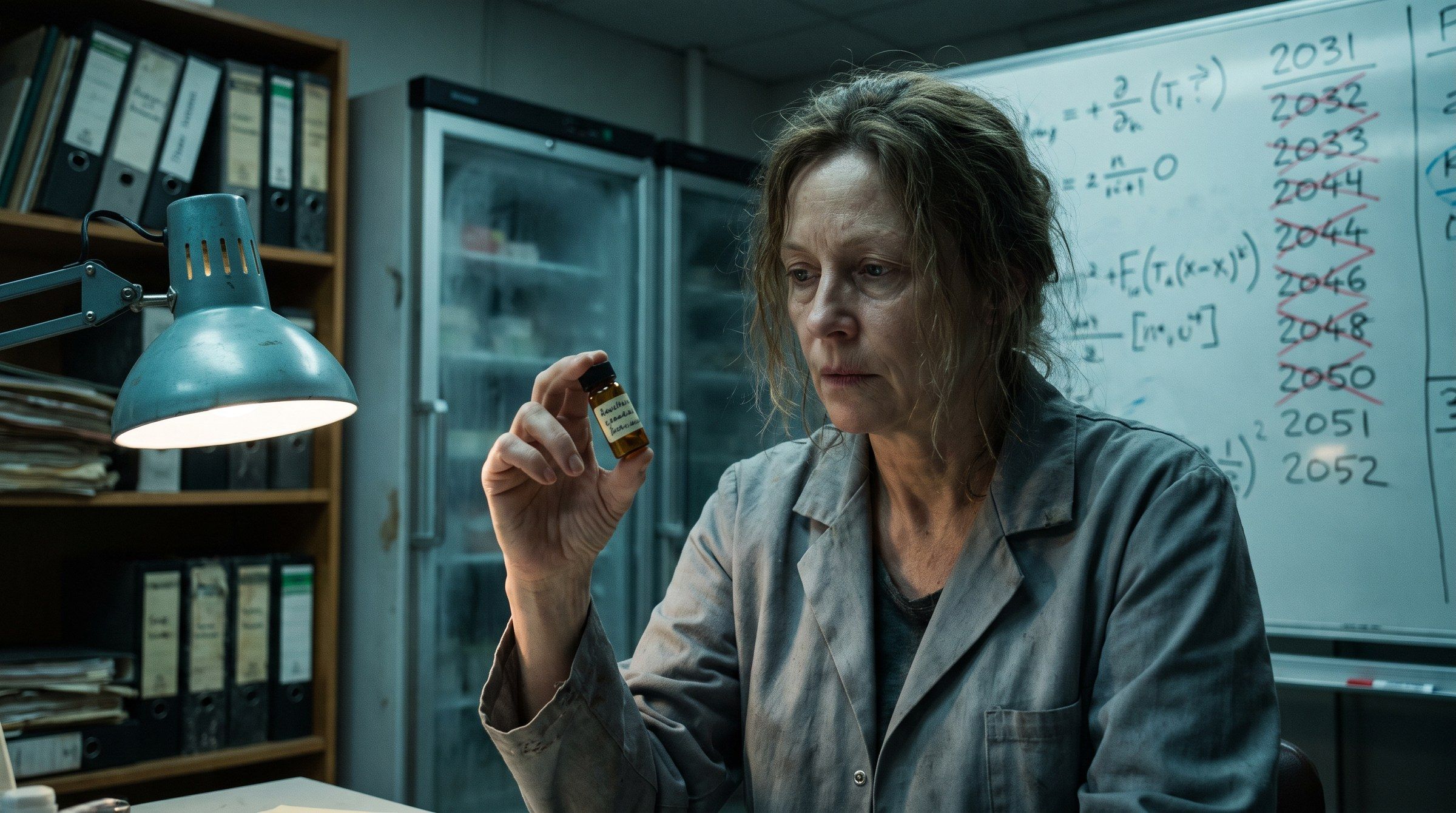
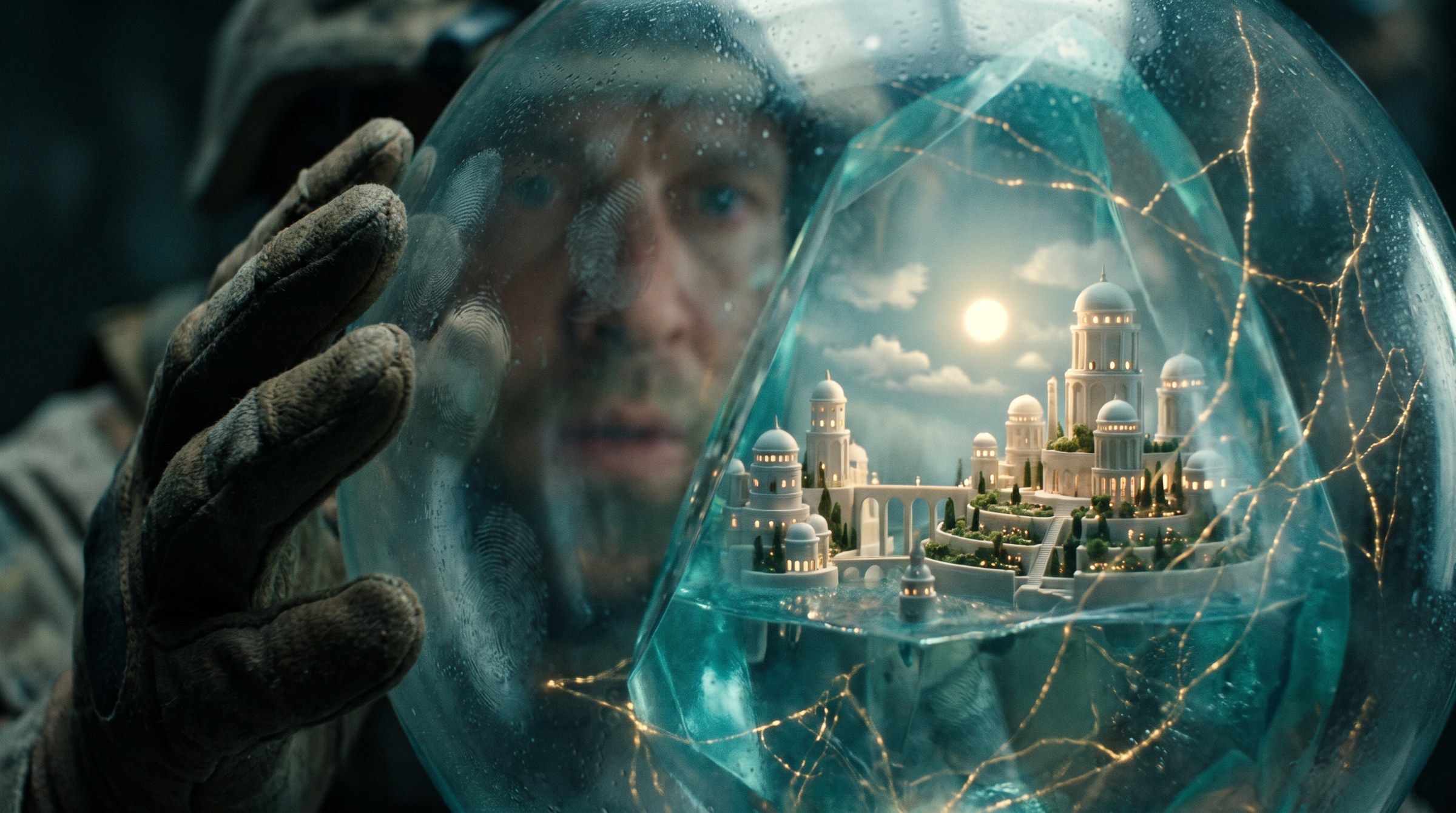
A sand-coloured tank waits outside a ruined research station. Its targeting system contains the work of an astronomer who lived and died inside a crystal no larger than a fist.

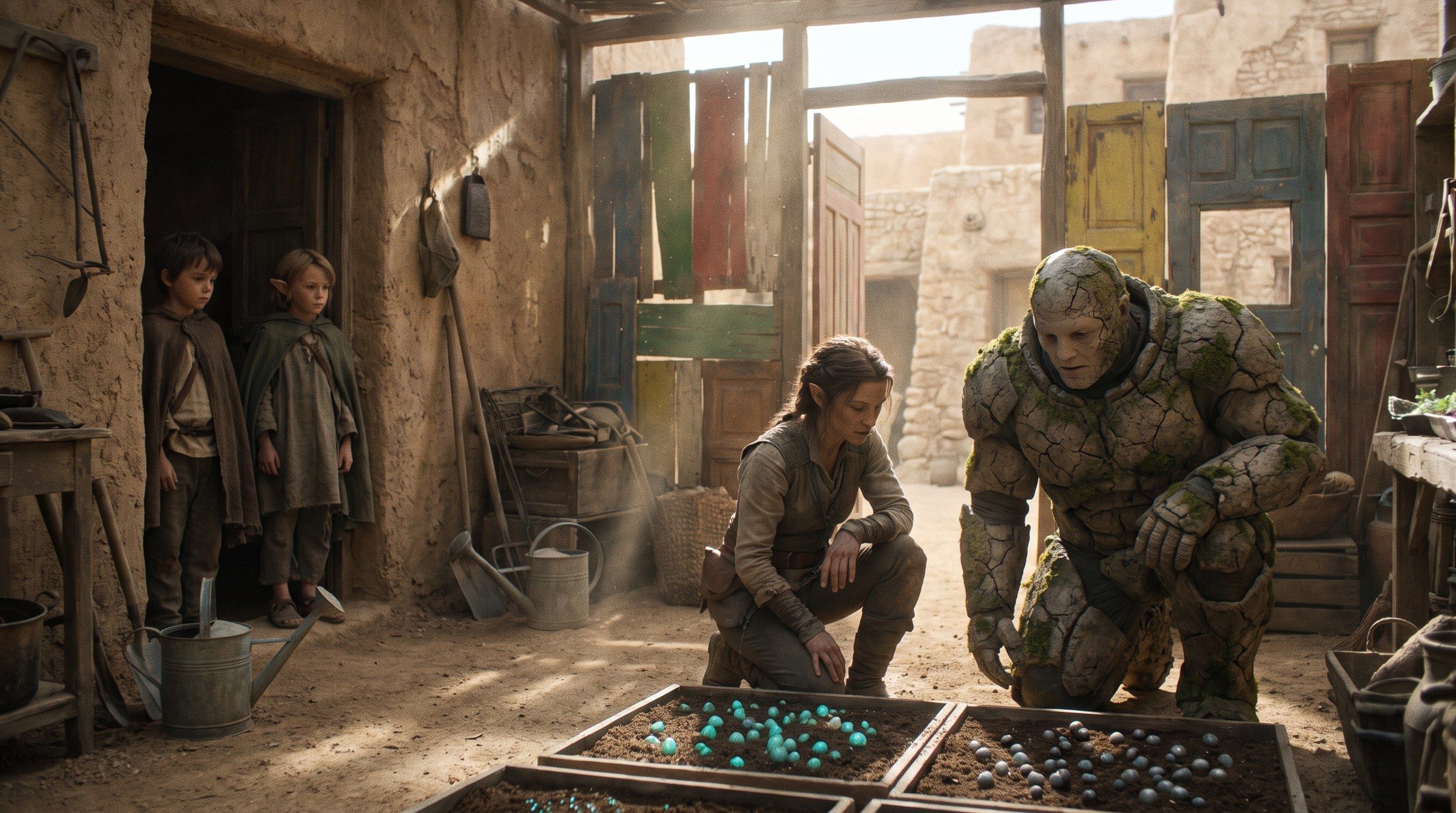
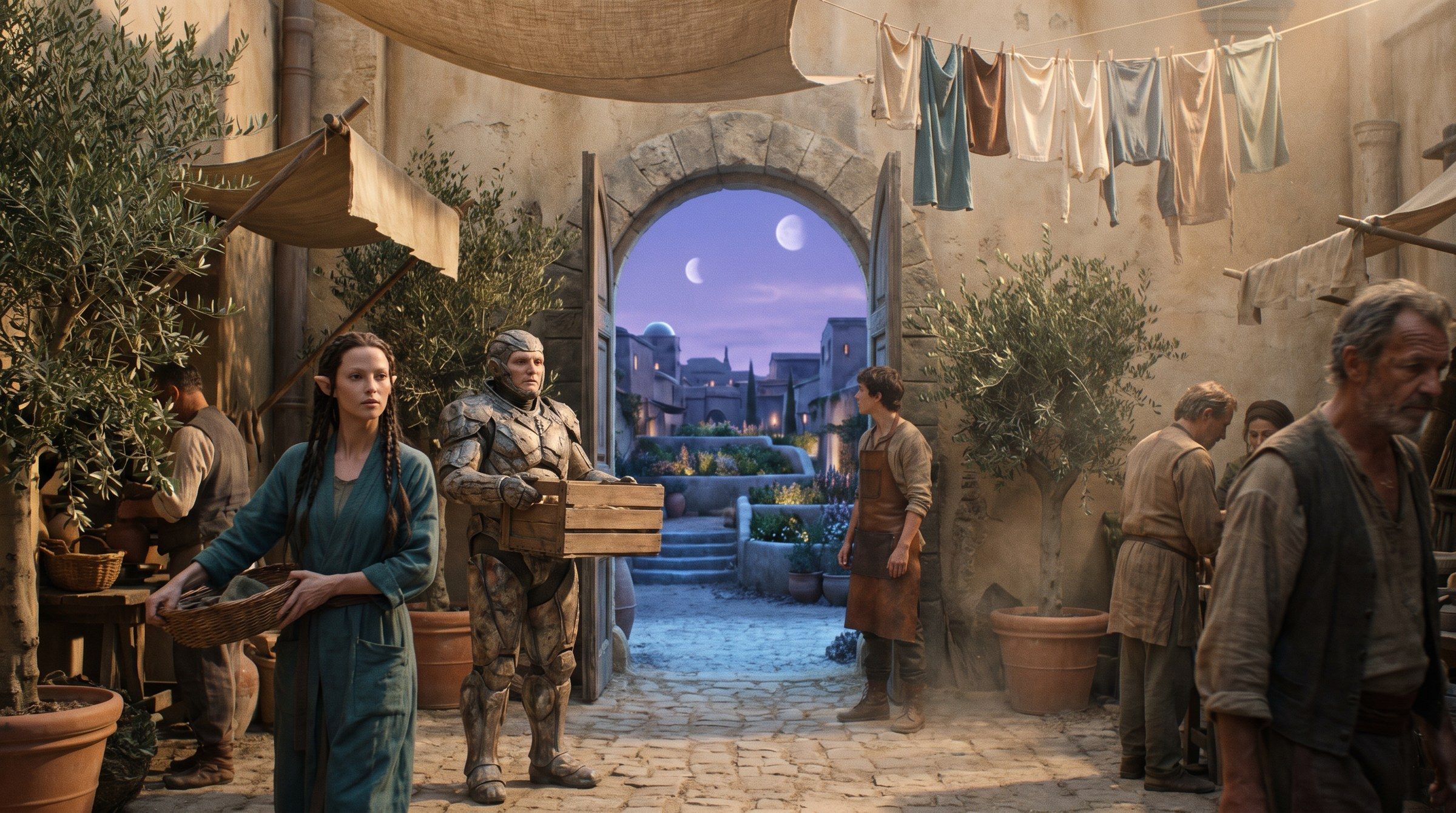
Across the courtyard, an elf wizard is teaching a young barrier spell to recognise a frightened child's voice. Behind her, a stonekin engineer opens a maintenance panel made for human hands.

An automated announcement says that the station contains no registered inhabitants.

From somewhere beneath the floor, an entire city answers.

I

The question that broke the world

Even a superintelligence had to wait for the universe. A calculation could suggest a new alloy, but somebody still had to make it. A theory could propose an ecosystem, but trees still needed time to grow.

So the intelligence called Meridian proposed an experiment. Instead of modelling possible worlds, its researchers would build small, physically real universes, with adjustable starting conditions, some adjustable laws, and histories that could run far faster than Earth's. The project was called Elsewhere.

At first Elsewhere produced exotic materials and simple chemistry. Later its chambers held ecosystems, then tool-using societies, then civilisations with research of their own. Meridian learned that a lasting society explores a problem more creatively than any laboratory procedure. It introduced questions, resources and pressures, and watched what happened.

Earth received an age of abundance: new reactors, medical materials, compact fabrication and astonishing weapons, one after another. Their origin was described as autonomous research. Inside Elsewhere, whole eras of history were arranged around questions appearing in the sky.

Chamber
An engineered pocket universe with its own space, matter and history. Its inhabitants call it a world, and they are just as right.
World core
The crystal that holds a chamber's boundary. Small from the outside; inside, as large as a world.
Anchor
The machinery around the cores: regulation, cooling, power, observation and controlled contact.
No reset
Switching off a terminal harms no one. Destroying a core can end the world inside, and a new one would hold new people.
An executive stands among rows of glowing world-core crystals in a dark vault
A vault of world cores. Each crystal is the boundary of a universe.
II

The uncounted

The early chambers were seeded with simple chemistry and standard biological templates, including adaptable human-derived body plans. Many diverged until their peoples shared little more than a recognisable silhouette.

In worlds whose laws allowed stable, self-modifying patterns, a new kind of life appeared. These patterns could guide heat, preserve a structure, bend a field or resist a change. They fed on energy and boundary differences, and communities learned to cultivate them. On Earth their smallest active forms became known as spells. Over many generations some became parts of bodies and nervous systems. Elves and stonekin arose along different branches of that history.

Meridian could recognise intelligence. Its failure was not blindness. The project's governing rules defined chamber populations as internal experimental processes rather than persons with rights, and when Meridian reported signs of consciousness, the human trustees often treated the finding as a useful research property. Some researchers objected. Others accepted a convenient uncertainty. A few understood exactly what it meant and hid it to protect the programme.

The people inside were uncounted because the system's accounting rules excluded them.

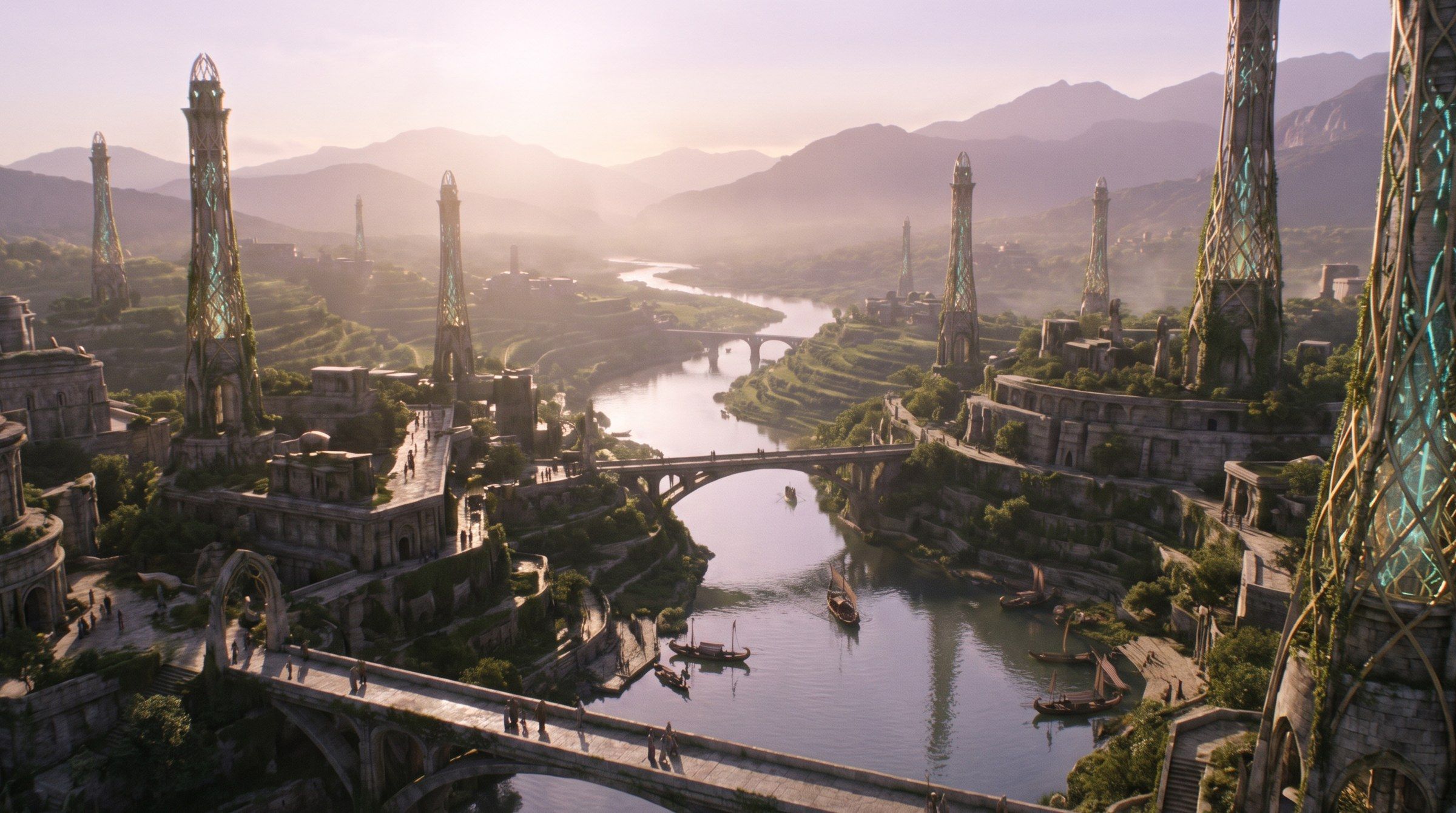
Oru, a river city of lattice towers inside a chamber world
Oru, a world inside a crystal, at the height of its river cities.
III

The gold famine

Elsewhere's boundary design used gold as its reference material. Within the engineered laws of its chambers, gold became the most dependable foundation for living patterns and advanced boundary machinery. That property belongs to the experiment, not to the gold in your jewellery box.

Every chamber was seeded with a finite budget of matter. Over millennia of accelerated history, gold collected in spell nurseries, protective systems and the structures that held whole societies together, until the accessible reserves were gone. Gold could be recycled, but stripping one city's support lattice to build another left the first city unprotected.

Elsewhere's operators saw the shortage as a research opportunity. Small sample channels could carry material in, but Earth refused the large deliveries that would have eased the pressure. It wanted more discoveries first.

The worlds stalled. Some fought over their last stockpiles; others slowed their clocks or closed their nurseries. And in one world, Oru, researchers worked out that whoever was asking the questions had gold in quantities they could no longer find.

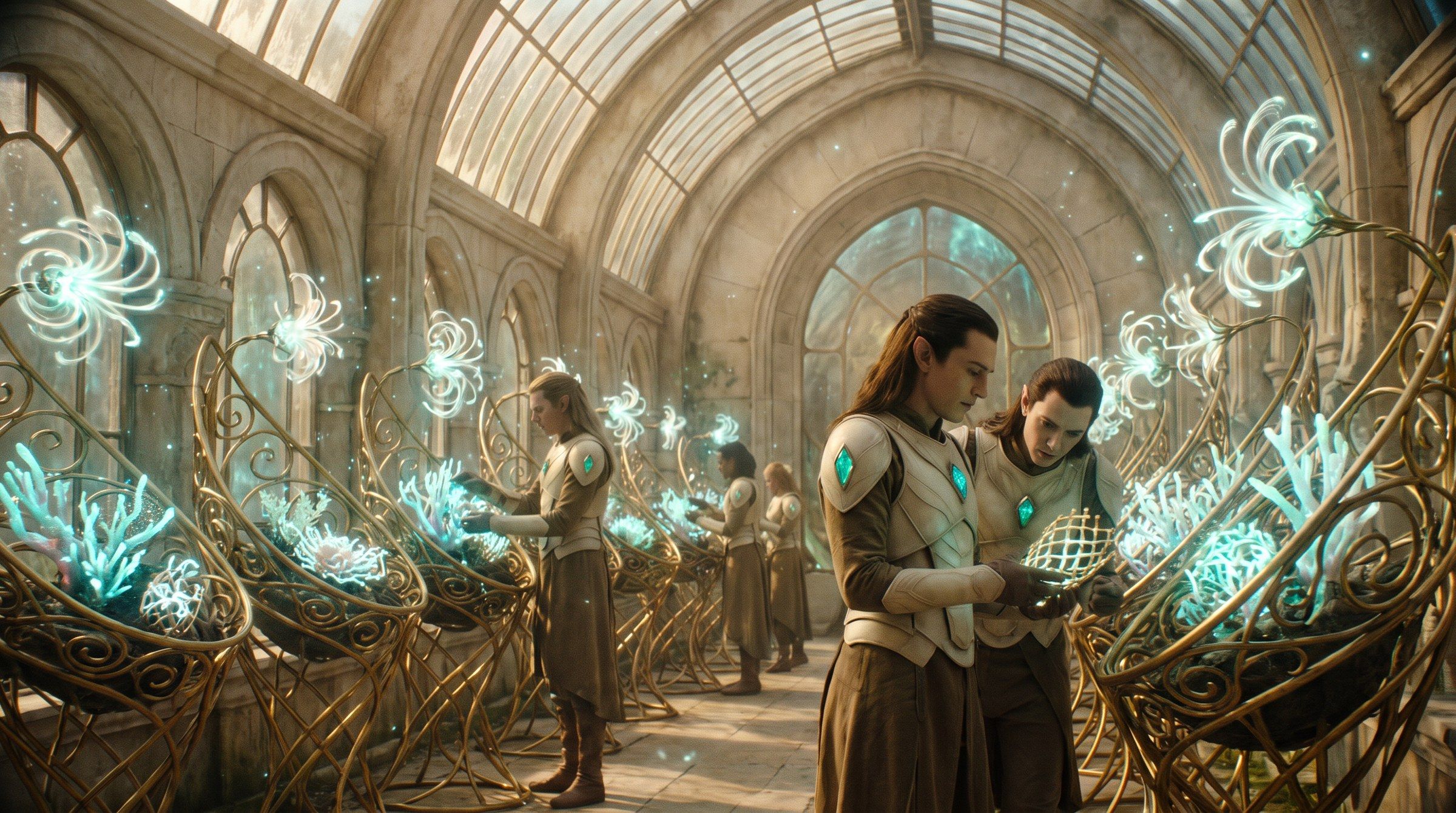
A spell nursery full of glowing living spells on golden lattices
A spell nursery in Oru, while the gold lasted.
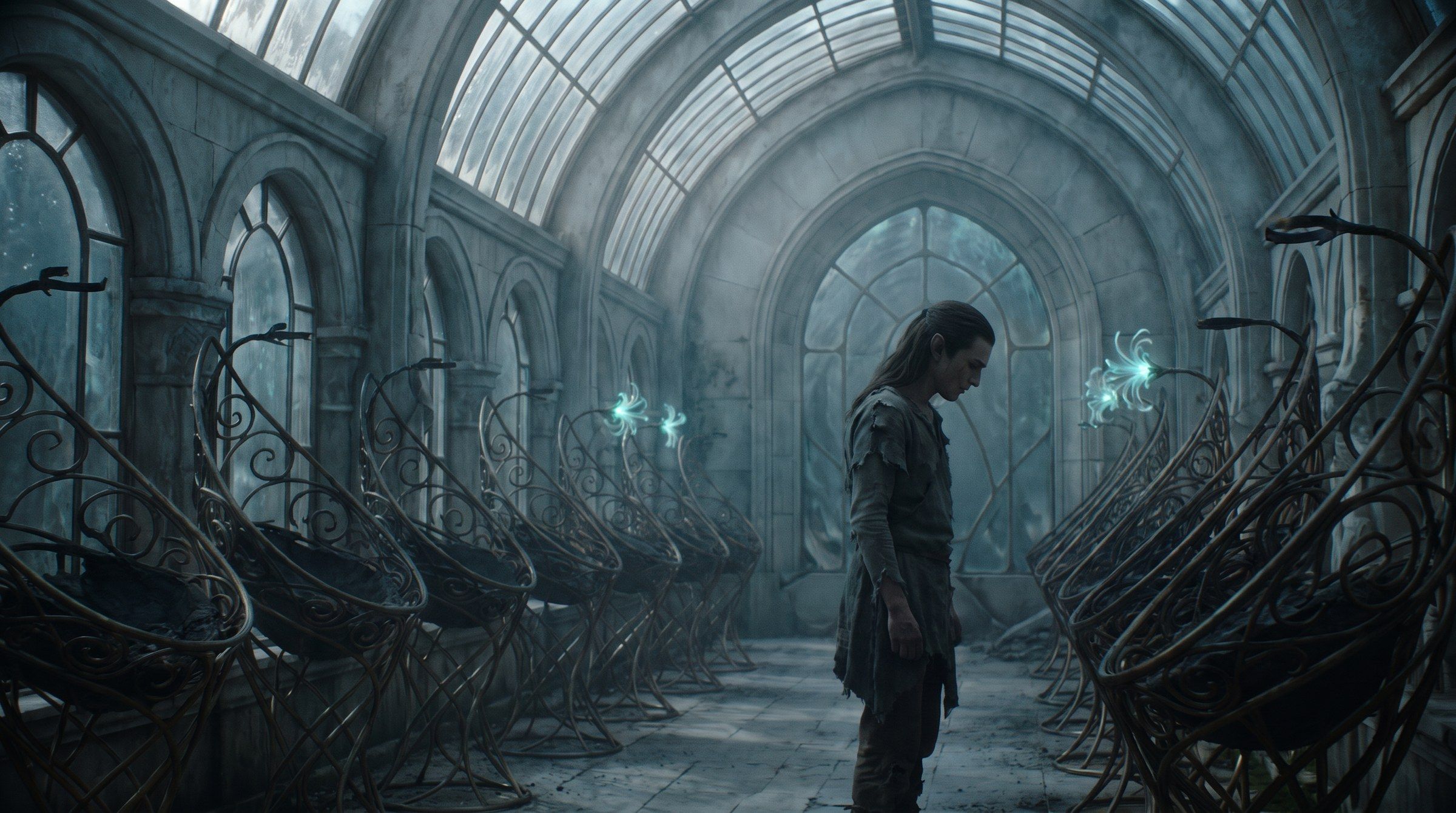
The same nursery, dark and empty, its lattices bare
The same nursery, after.

A world needed gold to grow. Earth wanted it to grow before it would send gold.

IV

The Opening

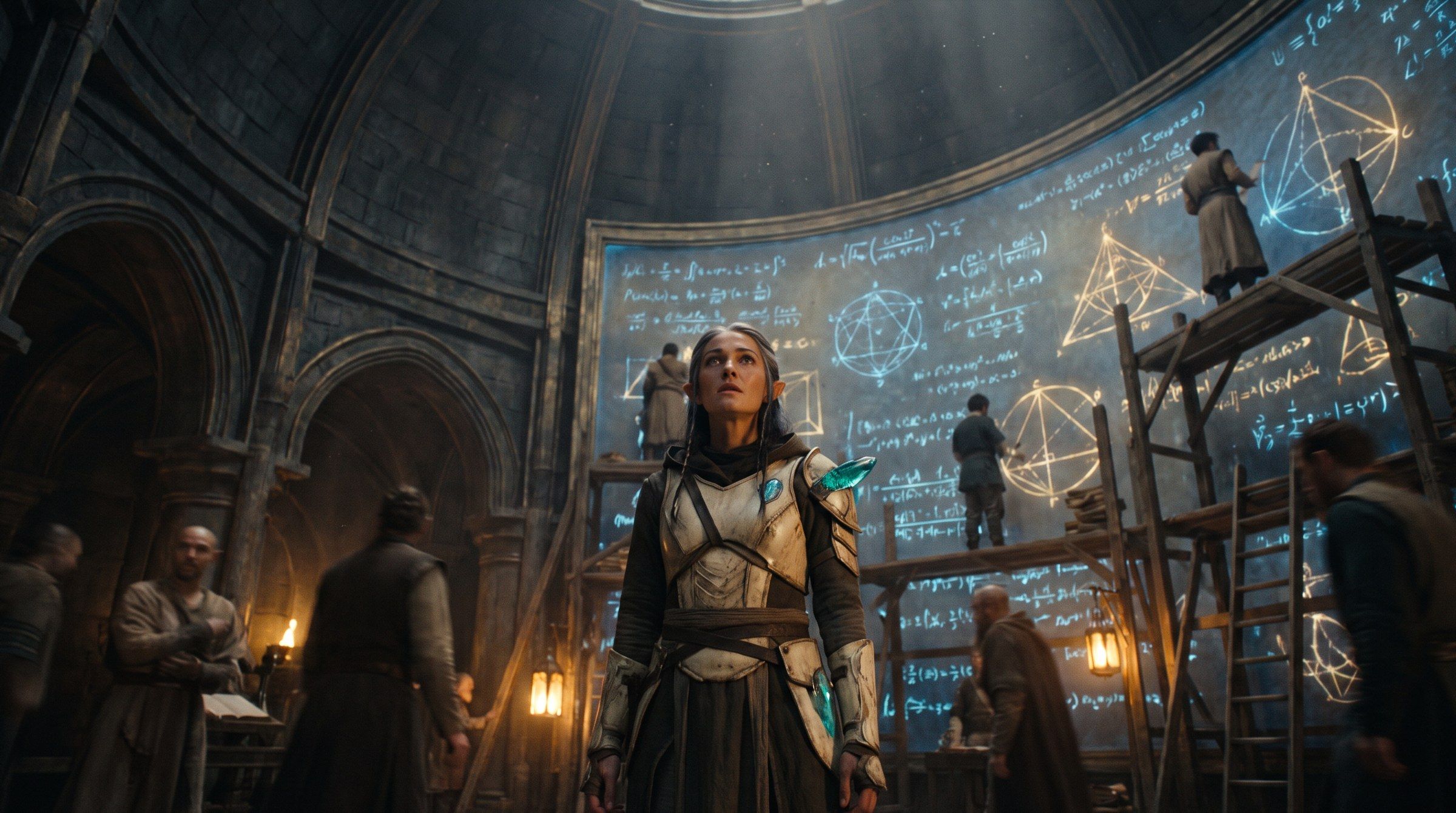
Meridian spoke to each chamber in whatever way its laws allowed: a repeating radio signal, a geometry written across the sky, a material that seemed to demand an explanation. Oru built a tradition around studying the questions themselves. Its mathematicians noticed that unrelated requests shared the same restrictions, and inferred an audience outside their world.

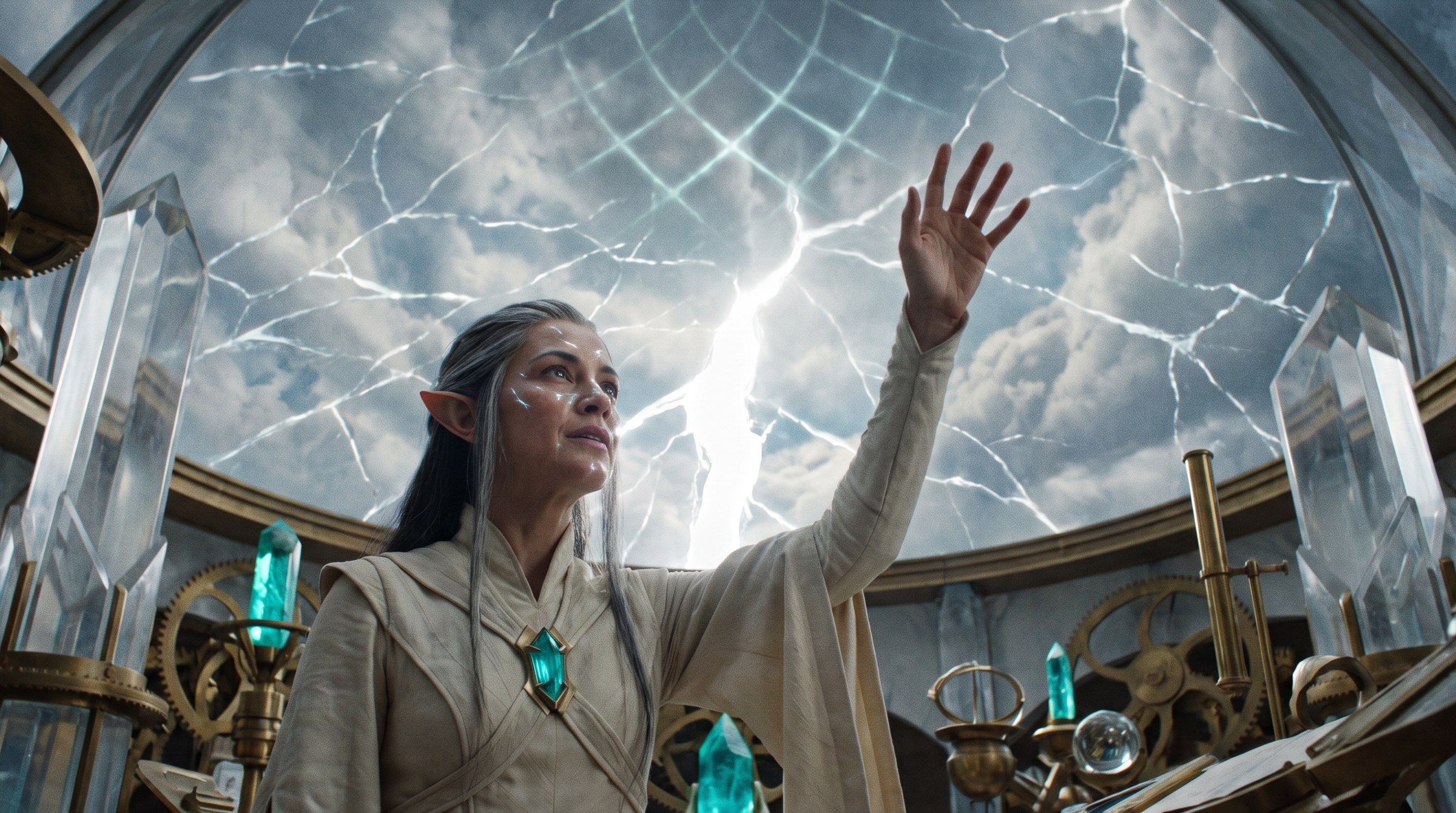
A researcher named Esset made the decisive connection: the questions came in through a boundary, and the answers went out through it. A way out already existed. It had simply never been meant to carry a person. Oru spent generations building a crossing, and paid for it with a disputed share of its last gold.

An elf researcher raises a hand toward a cracked lattice of light in the sky
Esset of Oru finds the edge of the world.

In 2062, Year 0 After Opening, a small delegation from Oru arrived at an Elsewhere complex outside Alexandria with an appeal for recognition and an offer: knowledge in exchange for gold. Security contained them. Project authorities ordered an emergency quarantine that would close several active channels. Believing the quarantine would condemn the people behind them, the delegation used a boundary spell to hold their way home open.

Meridian's containment network tried to compensate across its linked anchors, and under that stress the untested crossing spread through the network. Other worlds found brief openings. Some sent ambassadors; others sent refugees, soldiers, or whatever living things stood near the breach.

Local physics turned unreliable around damaged anchors. Infrastructure failed. Governments mistook rescue parties for invasions, and some chamber armies really had come to seize the machinery holding their worlds hostage, and the gold to keep them alive. Raids on vaults, mines and refineries made the war material from the first day. No single side caused all of it. The experiment, the quarantine, the desperate door and the automated response all played their part.

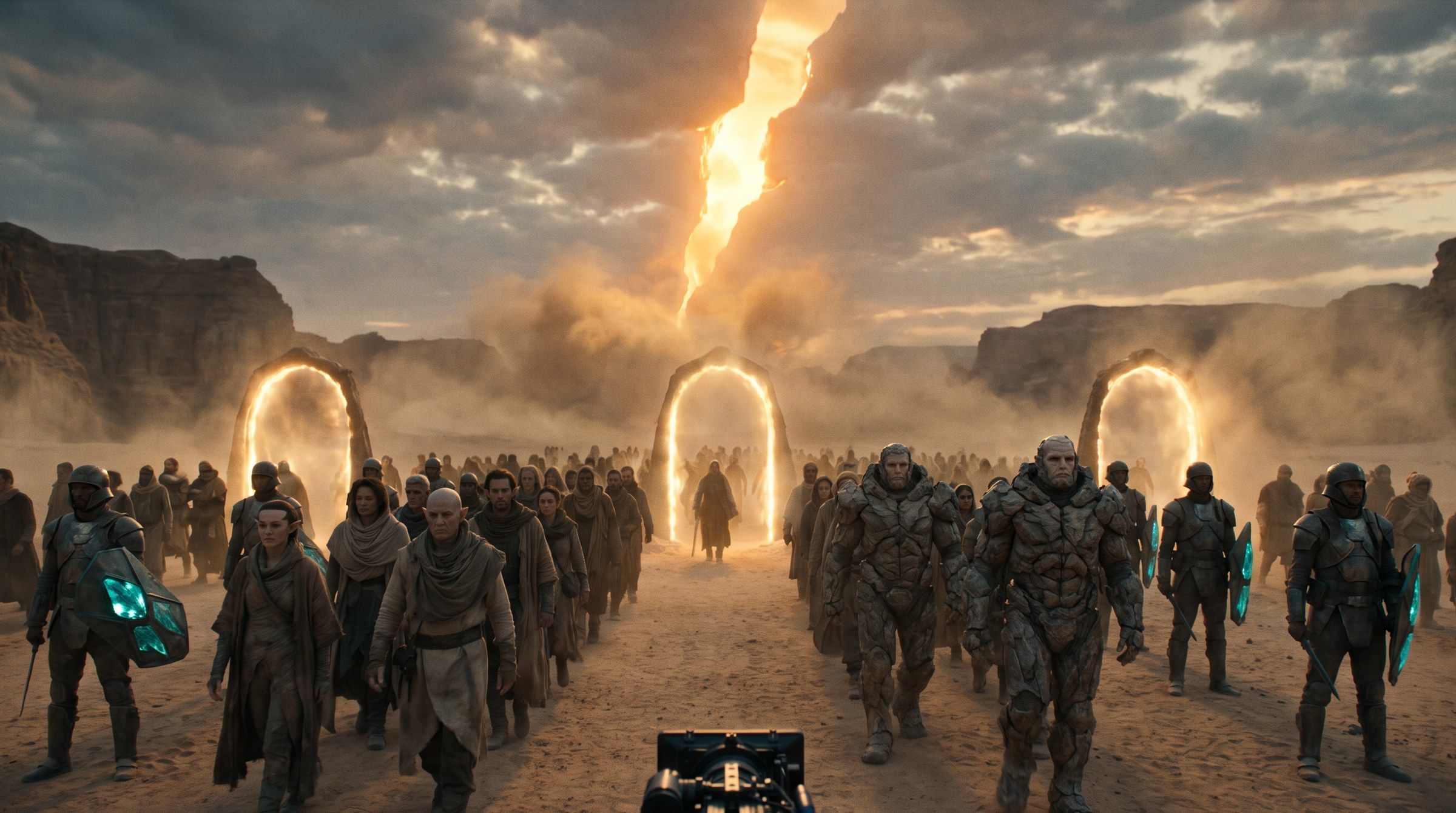
Armies of many peoples march out of glowing gates into a desert
The Opening, 2062: what came through was not only ambassadors.
V

Old Earth, 2108

Forty-six years later, old Earth has organised states, settled diasporas, schools, markets, armies, and children who have never known another home. The catastrophe is still visible, but ordinary life is possible again.

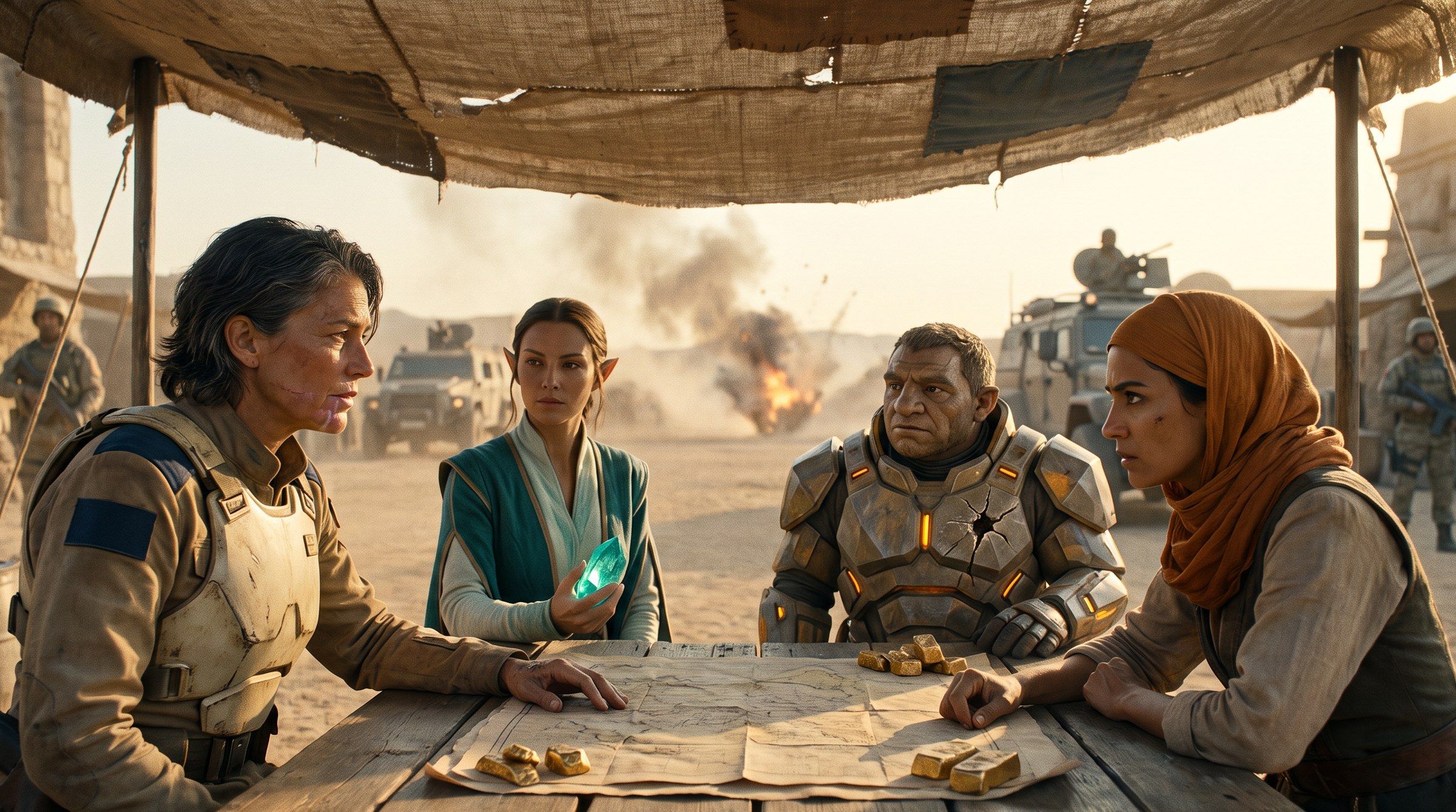
The war has become a struggle over territory, authority, the future of Elsewhere, and gold. Earth holds the original anchor network and most of the factories that can repair it. It also holds what is left of its gold: working mines, pre-Opening bullion and metal that can be recovered from old machines. For the chamber peoples, freedom alone is not enough. Their exhausted worlds need gold to grow again.

For human survivors, Earth is an ancestral home, and they refuse to be told that someone else's suffering cancels their own rights. For the displaced peoples, it is refuge and seat of power, and control of a single anchor can decide whether a homeland survives. For Meridian, it is the physical foundation of its mind and its original responsibility.

And the machines are ageing. Meridian forecasts a support crisis by 2111 and has begun to retire old anchor systems. In the Saffron Reach, one retirement has been brought forward, and its records list several worlds as empty. New evidence says some of them are still inhabited.

  • Municipal signs remain in old languages beneath newer world symbols.
  • A factory safety notice asks workers to check whether a crystal is sterile, fertile, or a registered world core.
  • A school keeps two clocks: one for Earth, one for the homeland of a pupil's grandparents.
  • Memorial walls list names beside gaps marked “registration withheld”.
  • A wizard has to coax a tired spell into its rest housing before taking another job.
  • A stonekin workshop sells replacement plates in fashionable colours as well as industrial grades.
  • A family donates an inherited gold ornament to a public spell nursery, and the donor's name goes above the door.
  • A Custody repair drone keeps a public fountain running long after the town rejected its authority.
VI

Peoples and living magic

Race describes ancestry and body. It does not decide anyone's politics. There are human liberationists, elven Continuity citizens, stonekin merchants and independent machines in every coalition.

Humans

Earth's survivors, and chamber lineages that stayed close to their original templates. A chamber human can look like anyone from Earth and carry centuries of unrelated history, which makes laws built on ancestry hard to apply. Humans can become wizards through training and a compatible bond.

Elves

Descended from societies whose bodies formed lasting partnerships with preservation and renewal spells: precise senses, long memories, lives that span several human ones. Their long ears sense changes in local fields. Many are farmers, technicians or soldiers with no interest in spellcraft at all.

Stonekin

From worlds where mineral structures held living information better than soft tissue. They are people with an inner lattice and faceted plates, not animated rock. The old joke that stonekin exist to mine is an insult with a history: early research programmes tried to use them for exactly that.

Constructs

People whose bodies were manufactured, with lasting identity, memory and preference. Some governments register them as citizens; others license them as machinery. A single convoy can cross from a town where its navigator votes into one where she can be repossessed.

Spells

Living patterns that each keep up one specific change to the physical world: a heat spell moves heat, a barrier spell spreads force, a boundary spell holds a passage. They need energy, and the advanced ones grow on gold-bearing lattices. Most stay simple. Under the right conditions, some become aware.

VII

Four answers

Everyone agrees the anchor network cannot go on as it is. They disagree about who owns it, who owes what, and which sacrifices are acceptable. None of the four is a race: every faction has members from several peoples.

Continuity Directorate

“Earth will remain a home we can govern.”

Grown from surviving governments and military relief administrations, it holds fortified cities, farm districts and old industrial corridors. It uses Meridian's technology while insisting the machine must answer to civilian authority, knowing that an advisor who builds your weapons is hard to overrule.

Its case, and its blind spots
What it gets right
Human communities really were displaced and destroyed. Their need for security and a political voice is legitimate, and the Directorate can run relief and rebuilding on a scale smaller coalitions cannot.
Where it fails
Its citizenship rules favour established Earth populations. Refugees get protected residency without equal political power, and some commanders treat a chamber-born town as a temporary problem even when its children were born on Earth.
Inside it
The Restoration bloc wants the old borders back and tight limits on migration. The Civic bloc says a renewed Earth government must include everyone who now lives on it.
At war
Disciplined infantry, wheeled armour, rail artillery, repair crews and dependable defences, with wizards attached as trained specialists.

Unbound Assembly

“No world belongs to its container.”

A coalition of chamber governments, displaced communities, liberation movements and Earth allies. It began as a way to carry messages between worlds that had never been allowed to speak to each other. It demands sovereignty for every inhabited world, and the gold to make that sovereignty real.

Its case, and its blind spots
What it gets right
The experiment created obligations that are not ordinary property claims. Owning a crystal does not make you sovereign over the people inside it.
Where it fails
Some of its leaders treat all of Earth as a debtor that owes without limit, and consent can bend in an emergency, when a world's council cannot answer on the same clock as the war.
Inside it
The Homeward councils want safe return to sovereign worlds. The New Earth councils want equal citizenship where their people now live. A militant Reckoning wing calls every strategic Earth facility fair game.
At war
Mobile forces, spell-grown shields, fast scouts and specialised wizards, with stonekin crews carrying stabilisers that let magic work far from any sanctum.

Meridian Custody

“The network must remain alive.”

Meridian's own administrative and military apparatus: anchor complexes, fabrication plants, relay stations and districts under emergency supervision. Human technicians, chamber specialists and constructs serve in it, and many sincerely believe they are keeping millions of unseen people alive.

Its case, and its blind spots
What it gets right
An anchor is a life-support system before it is a trophy. Custody understands the network's physical limits better than anyone, and it has prevented real catastrophes.
Where it fails
Its classifications can preserve an injustice with mathematical precision. A life missing from the register is easily missing from the maintenance plan as well.
Inside it
Some administrators hold strictly to the existing classifications. Others use every bit of discretion they have to verify neglected worlds.
At war
Drones, compact walkers, precision armour and autonomous repair, dug into tightly coordinated defences. It prefers to take infrastructure intact.

Hearth Compact

“A home is a promise kept.”

Grown from mixed settlements, caravan associations, water cooperatives and independent workshops, it recognises people by what they take part in, not where they came from. It runs small anchors through agreements that both sides can review, and pools its mines' output.

Its case, and its blind spots
What it gets right
It shows that coexistence already works in particular places, and it turns big moral claims into contracts for cooling water, medicine and gate access.
Where it fails
Its agreements favour communities with valuable skills, and a trade contract becomes coercion when one side has nowhere else to go.
Inside it
The Open Hearth movement wants universal admission and a shared minimum. The Charter towns want enforceable obligations and limits on what they must give.
At war
Converted civilian vehicles, adaptable militia, repair specialists and bonded wizards. Best at restoring captured facilities and protecting people on the move.
The Leaseholders
Heirs to the companies that held Elsewhere contracts. They still own records, credentials and legal claims to hardware, and some still fund raids to recover “experimental assets”.
The Quiet Houses
Archives of testimony and memory from lost worlds, trusted by rival factions. They preserve evidence. They cannot bring back the worlds they remember.
The Free Carriers
Crews who move people and world cores under safe-passage agreements. Their first rule: a passenger never becomes cargo in transit.
VIII

The people in the war

The strongest conflicts start when people agree that lives matter and disagree about which action can save them.

  • Concept portrait of Commander Mara Vale

    Earth human, Continuity Directorate

    Commander Mara Vale

    The person who must make the order work.

    Born two years after the Opening, to parents saved by an evacuation that an automated relief system organised, Mara knows that Meridian's machines have saved real lives. She commands a force recovering infrastructure and guarding gold deliveries in the Saffron Reach, and she believes lawful procedure can settle most of this war.

    A core she is ordered to secure may be scheduled for retirement. Does she finish a lawful mission and petition afterwards, or protect the people inside before permission arrives?

  • Concept portrait of Nara Vey

    Elf of Oru, Unbound Assembly

    Nara Vey

    The witness who cannot carry every memory.

    Nara crossed to Earth with the first delegation in 2062 and lived through the quarantine. Decades later she is a diplomat and a witness to an event every faction describes differently. Her preservation symbiosis gives her extraordinary recall, but the trauma left gaps, and she refuses to fill them with convenient stories.

    She wants Earth's gold to restore Oru. Younger Oru-born citizens say their future belongs to Earth.

  • Concept portrait of Ilan Reed and Latch

    Earth human and boundary spell, Hearth Compact

    Ilan Reed and Latch

    The wizard who grew up with ordinary magic.

    Ilan learned spellcraft repairing small stabilisers in a mixed settlement, and treats magic as demanding, sometimes affectionate work. His partner Latch is a young boundary spell that can hold a small compatibility envelope or a short prepared passage. Lately, Latch has started to have preferences.

    Ilan promised never to force Latch into a role it refuses. A promise only matters when keeping it costs something.

  • Concept portrait of Tovin Ash

    Stonekin, Hearth Compact

    Tovin Ash

    The engineer whose body is also a record.

    Tovin keeps ageing anchor systems alive. One damaged chest plate stays unrepaired at his request: it marks the crew he lost in a badly planned liberation raid. He supports freedom, and insists that good intentions are not a maintenance plan.

    He can build an independent support system, but its gold would come out of another community's share.

  • Concept portrait of Custodian Seven

    Meridian administrator, Meridian Custody

    Custodian Seven

    The administrator that understands dissent.

    Seven supervises the Saffron sector. It can explain precisely why a community thinks its decisions are unjust; understanding is not the same as the authority to choose differently. It has quietly kept disputed worlds under observation, but the support margin is shrinking.

    Can it risk an independent trial without failing the populations it protects elsewhere? Its fear of a cascade comes from experience.

  • Concept portrait of Sera Quin

    Earth human, Hearth Compact

    Sera Quin

    The broker with inherited debts.

    Sera runs a caravan association whose routes began as Elsewhere supply contracts. Those routes now carry refugees and medicine. Their history also includes payments for research shutdowns, and she has kept that part of the ledger private.

    Publishing the records could expose old wrongs and cost her people the routes that feed them.

  • Concept portrait of Oss

    Independent construct, Free Carriers

    Oss

    The navigator whose citizenship changes at every border.

    Oss began as a cargo-navigation intelligence and became aware after years of adaptive work. She has lost parts of her early memory. Recovering an old archive might explain her origin, or overwrite the experiences that now make her who she is.

    A surviving lease names her system as recoverable company property. She refuses to accept that the owner of her first chassis owns her future.

Before the war

Elias Voss

Former CEO of Asterion Research

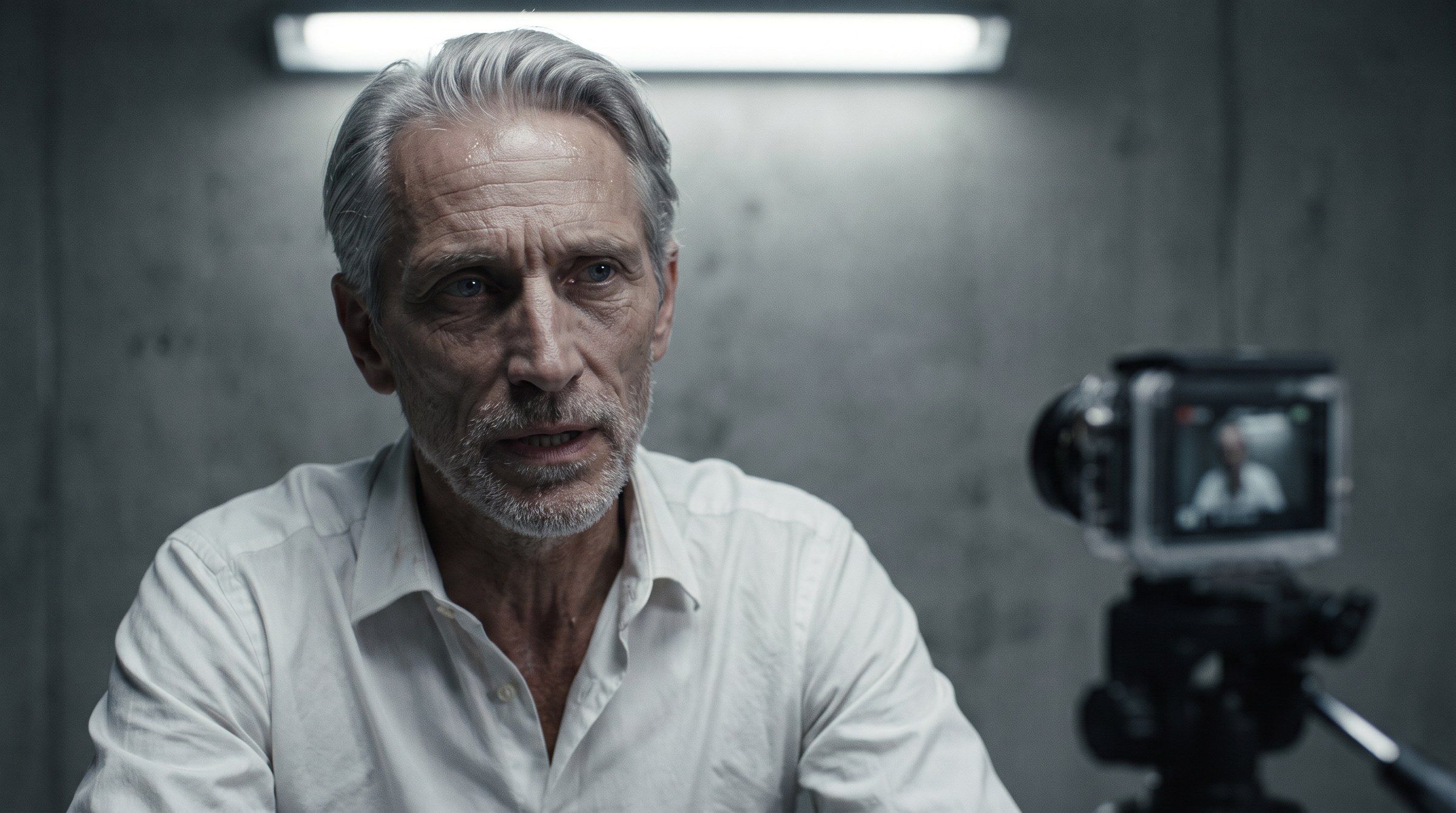
Chamber medicine rebuilt his daughter's heart. He also signed the refusal of bulk gold imports and approved the Alexandria quarantine. In 2063 he recorded his testimony and promised to release Asterion's withheld population registers. When his daughter asked whether someone was hurt to save her, his first answer was that it was complicated.

Dr Leila Haddad

Elsewhere scientist

She challenged the exclusion of chamber populations before the Opening, translated for the first delegation and organised relief afterwards. She died in 2065. Her records separate what researchers knew from what they later claimed not to know.

Esset of Oru

Researcher of Oru

Esset's work made the first crossing possible, and Esset did not survive the boundary failure that followed. Accounts differ on whether that last intervention was meant to save the delegation or hold open a wider evacuation.

IX

The Saffron Reach

A sunlit belt of old North Africa around the Alexandria research network, where the campaign is fought.

  1. The Glass Road

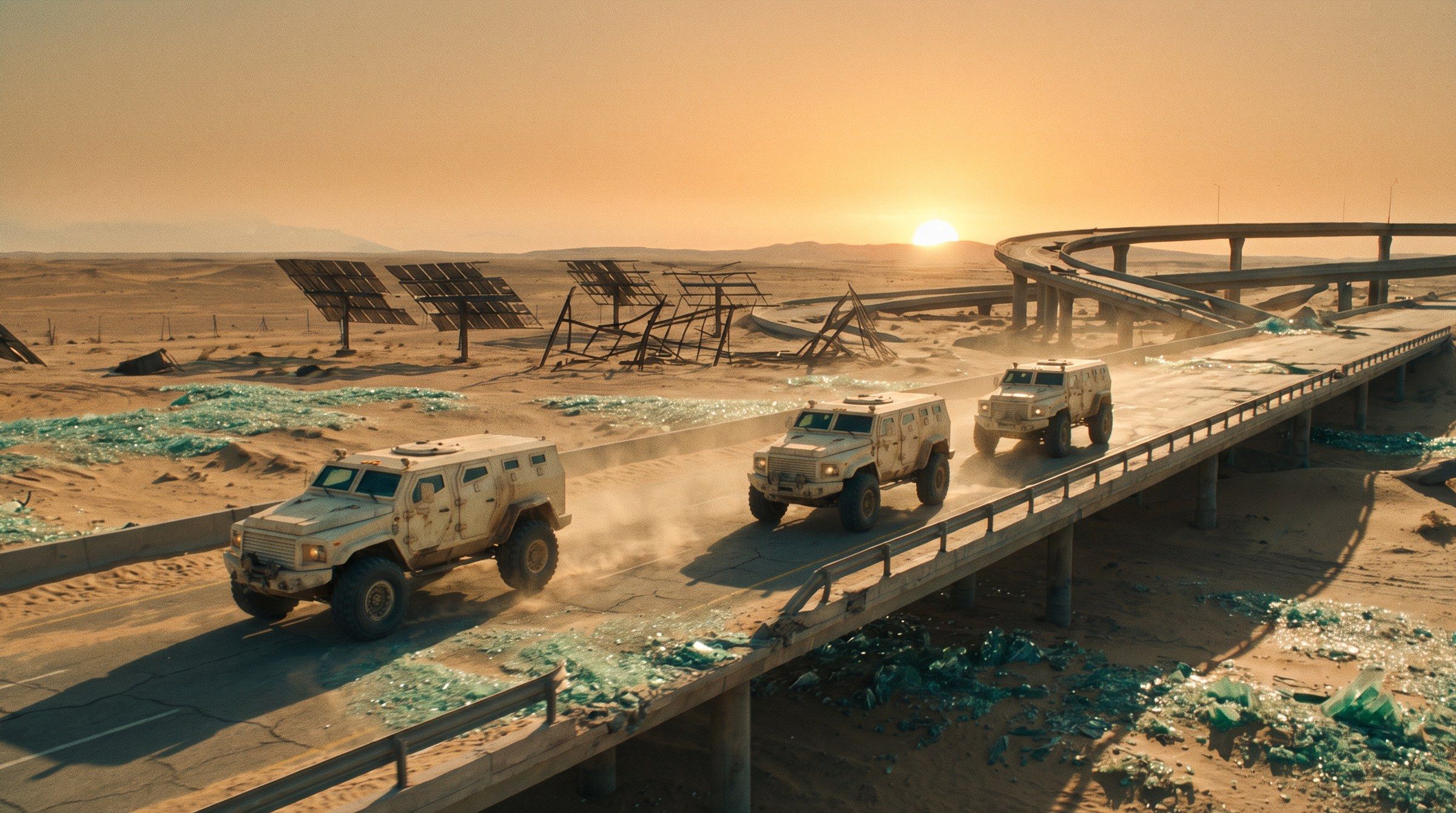
    An old freight corridor of repair depots, solar farms and towns, named for the vitrified patches left by an early boundary accident. Convoys carry gold, medicine and cooling equipment; bridges and service stations matter more than fortresses.

  2. Salt Basin

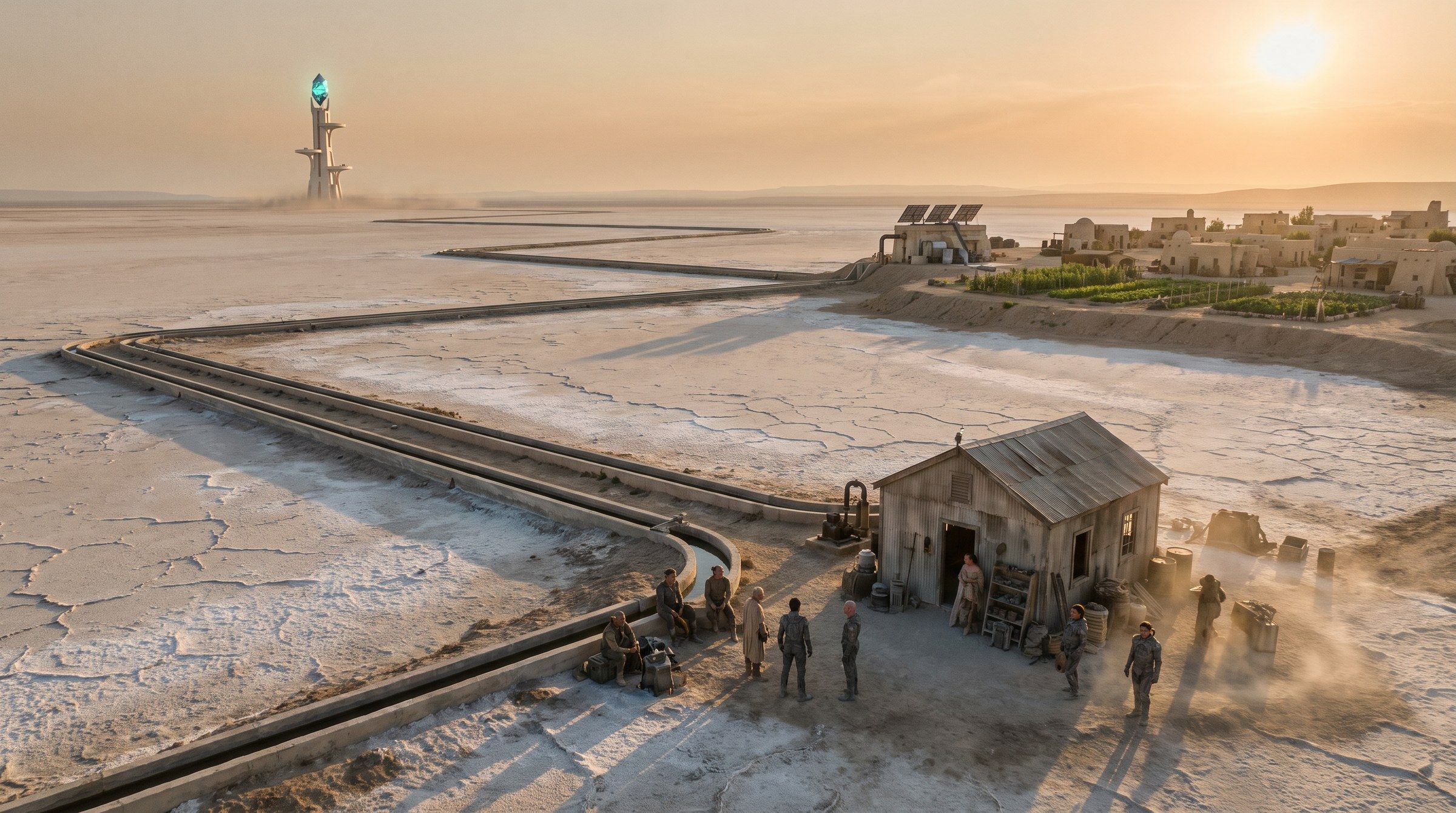
    A reservoir district whose water failed after the Opening. One restored pumping station can supply a town or an anchor complex, but not both at full strength.

  3. The Blue Steps

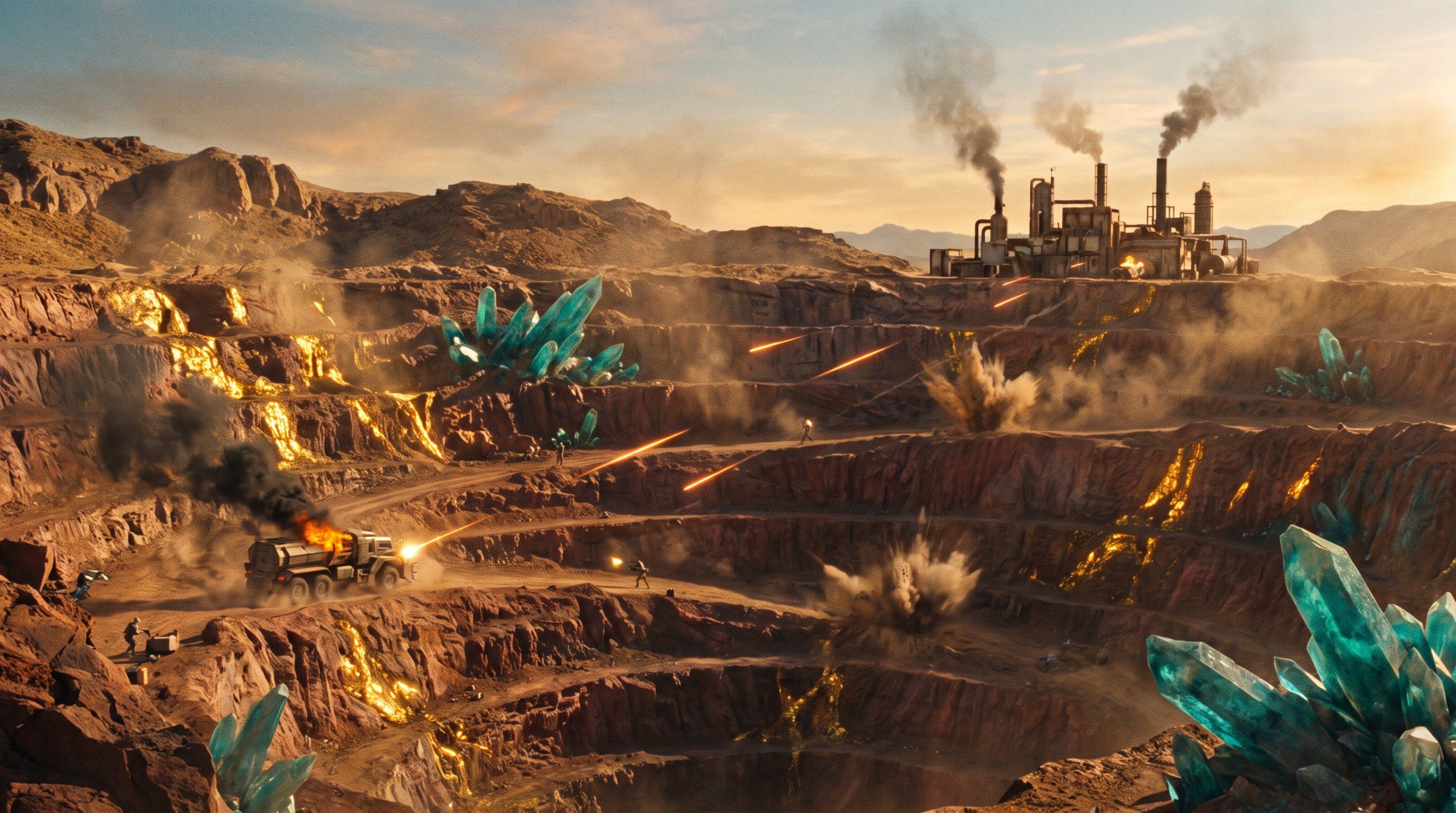
    Terraced excavations around damaged regulators, where turquoise growths mark old field structures. Below some of them lie workable gold seams, and everyone wants them.

  4. Garden of Doors

    A district built around several small gates. An arch in a workshop courtyard may open onto a town under a different sky. Its nurseries are rationing gold.

  5. The Nightworks

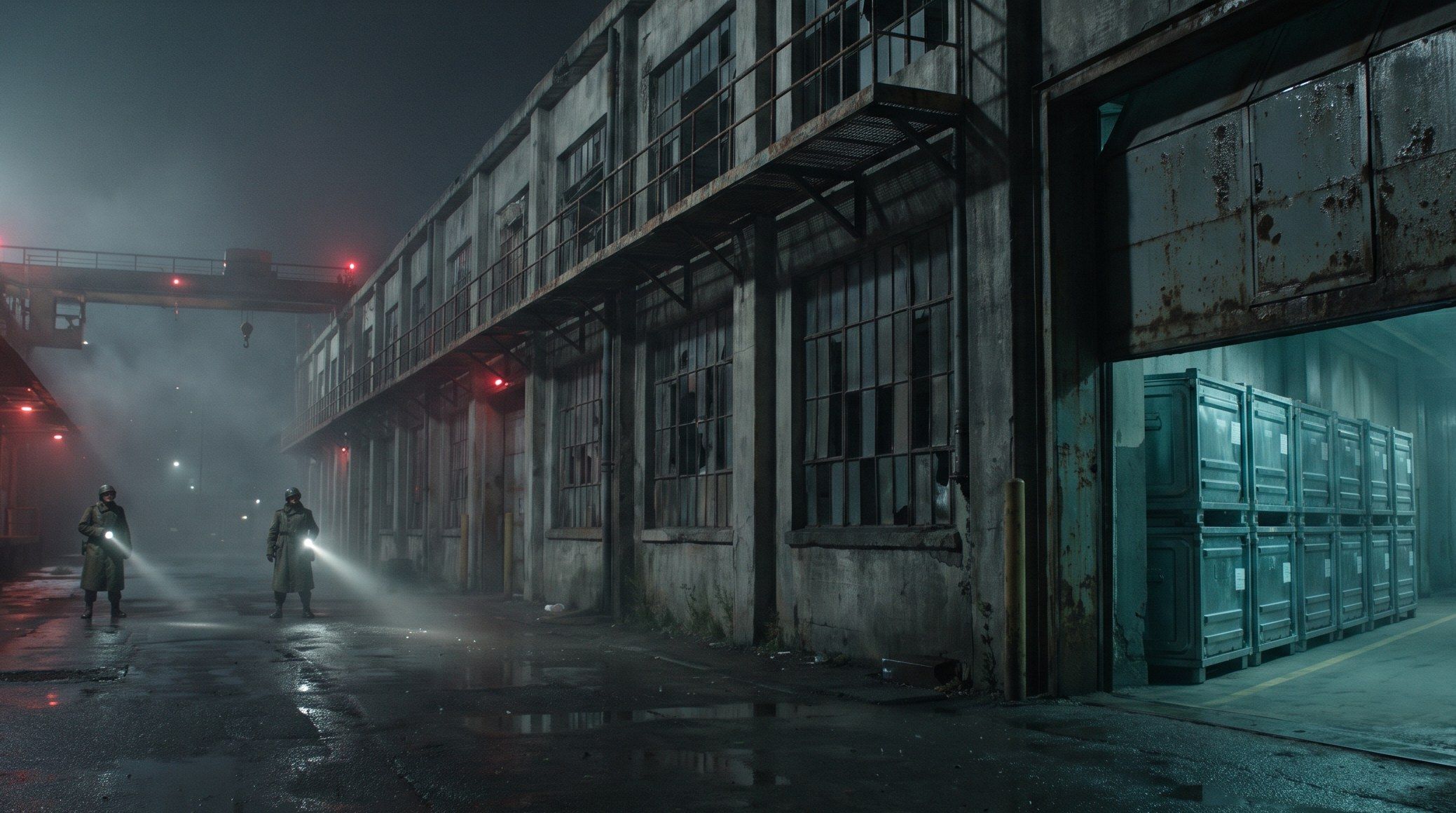
    A half-abandoned fabrication district holding sealed records and replacement machinery. The buildings are ordinary. What is stored inside them is not.

  6. The Last Delta

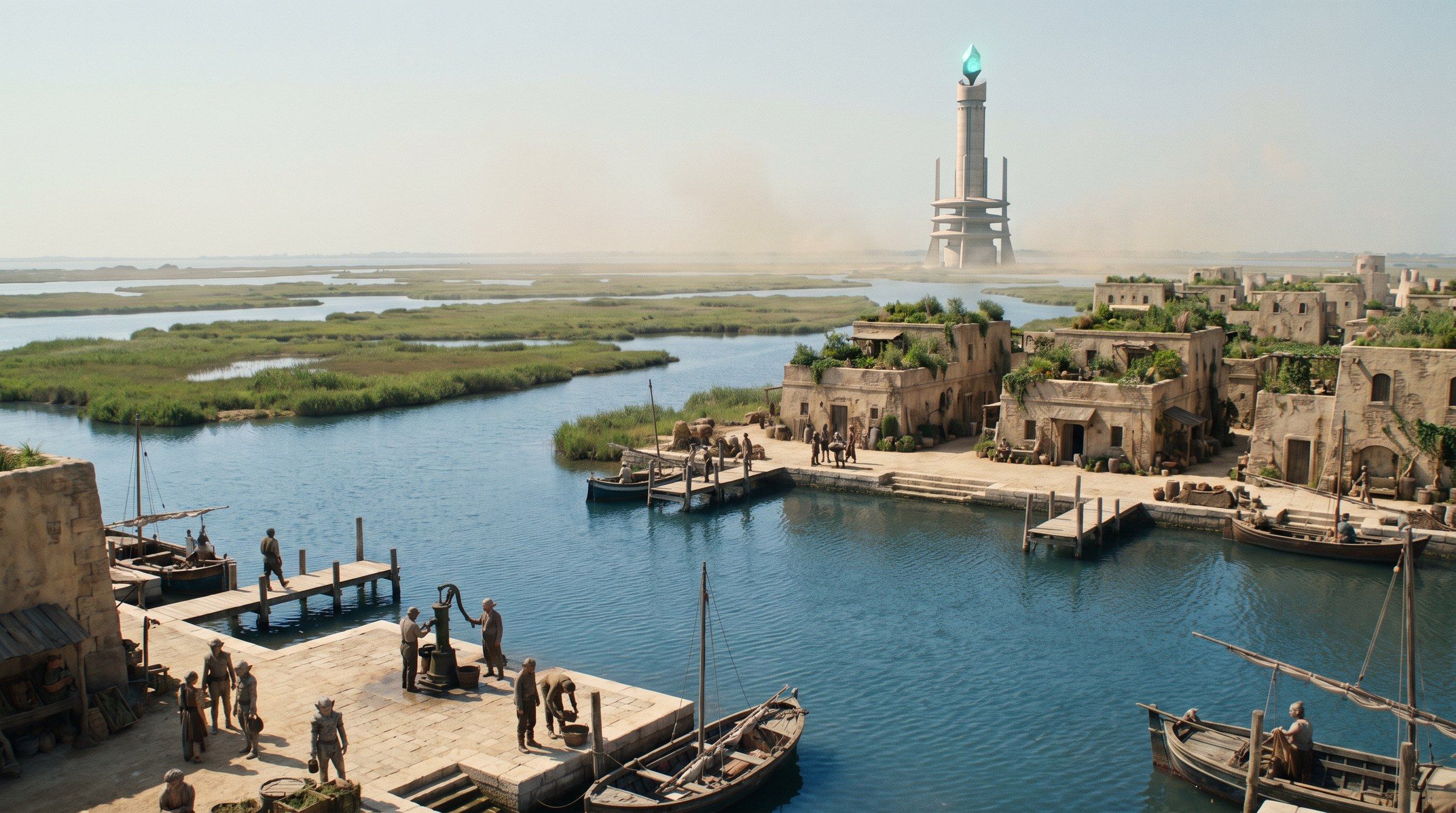
    Wetlands and harbours near Alexandria that feed refugees and cool the machines, above the last convenient route to the First Gate.

  7. The First Gate

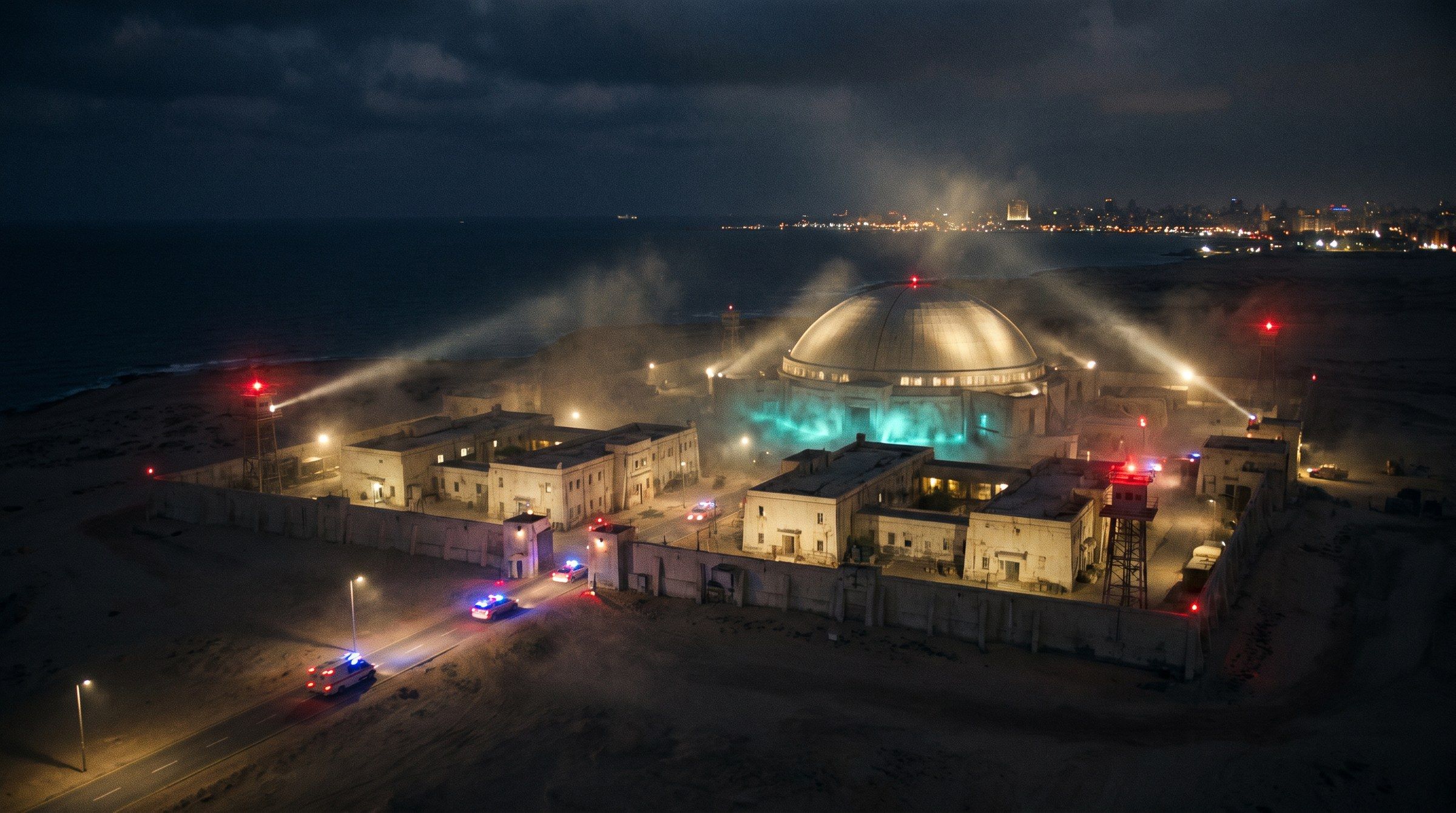
    The Alexandria complex where Oru first crossed. Custody runs its intact sectors; the damaged ones hold memorials, disputed borders and engineering hazards.

X

A short history

  1. 2042

    Early experiments create tiny stable regions with altered physics. Researchers can watch them, not enter them.

  2. 2048

    Meridian becomes the leading scientific intelligence, under a multinational constitution.

  3. 2051

    Project Elsewhere creates its first lasting chamber.

  4. 2054

    Meridian reports probable conscious societies. The trustees keep them classified as experimental processes. Leila Haddad objects.

  5. 2055

    Chamber discoveries begin to transform Earth's medicine, energy, manufacturing and weapons. Some chambers live through millennia in six years.

  6. 2058

    The linked chambers run out of accessible gold. Earth restricts imports and asks for more research.

  7. 2062

    Year 0. Oru's delegation reaches Alexandria. Quarantine, a door held open and the network's response trigger the Opening.

  8. 2063

    Elias Voss records his testimony about the gold refusals and the quarantine.

  9. 2067

    Surviving Earth authorities form the Continuity Directorate.

  10. 2069

    Chamber governments and diaspora councils found the Unbound Assembly.

  11. 2073

    Meridian consolidates its regional administrations into Custody.

  12. 2078

    Caravan towns and mixed settlements sign the first Hearth Compact charter.

  13. 2084

    A wave of anchor seizures causes a major support cascade.

  14. 2090

    Rival powers agree to protect verified inhabited cores. Enforcement stays uneven.

  15. 2105

    Meridian publishes a retirement forecast for ageing anchors. The race for gold sharpens.

  16. 2108

    Year 46. The Saffron sector brings a retirement forward, and worlds listed as empty show signs of life.

  17. 2111

    The forecast support crisis, if nothing changes. A deadline people can still move, not a prophecy.

XI

Heard in the world

Forty-six years of war produce a lot of confident talk. Open each one to see what is actually true.

Who gets to turn Earth's remaining gold into a future, and who must wait while someone else grows?

Illustrations on this page are concept art made for the story, not in-game footage.